
OUR SERVICES
Flex PCB(FPC)
Flex PCB(Flexible printed circuit board, Flex Circuit Board, FCB, FCP, Flexible FPC, FPCB or soft boards) is a patterned arrangement of printed circuitry and components that utilizes flexible base material with or without flexible cover lay. The IPC defines a flexible printed circuit as “a patterned arrangement of printed circuitry and components that utilizes flexible base material with or without flexible cover lay.” This definition, while basic, illustrates what you can expect from a flex PCB – a bendable printed circuit that is made of a flexible film.
Future Trends
As technology continues to advance and demand for more compact, lightweight, and innovative electronic devices grows, flex PCBs are expected to play an increasingly important role in the future. The unique characteristics of flex PCBs, including their adaptability, durability, and design versatility, make them well-suited for emerging trends and applications.

Types of Flexible Printed Circuit Boards
Since they have been applied across a wide range of industries, flex PCBs have grown in complexity. Listed below are some of today’s most common types of flexible printed circuit boards.
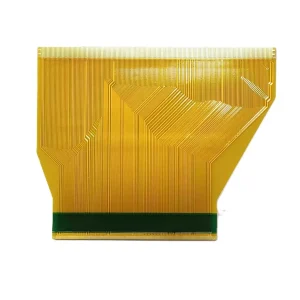
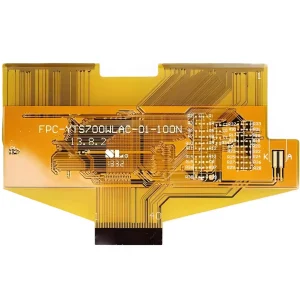
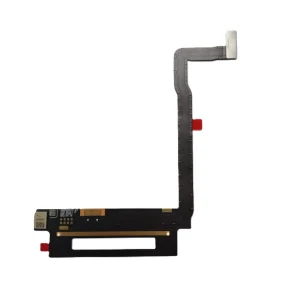
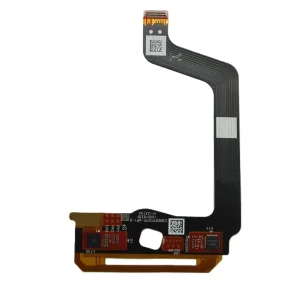
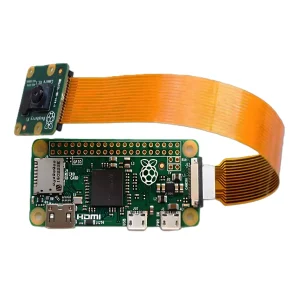
A copper foil is laminated on one side of a flexible insulating substrate to form the circuit. It has the simplest structure and the lowest cost, making it suitable for products with simple circuits and no need for complex wiring.
Conductive circuits exist on both sides of the substrate, with interlayer connections achieved through plated through-holes. It offers stronger functionality than single-sided boards and is suitable for designs with higher wiring density.
Consists of three or more conductive layers interconnected by vias. It enables high-density, complex circuit designs but comes with higher costs and manufacturing difficulty.
Integrates flexible and rigid circuit boards into a single structure. The rigid areas are used for component mounting, while the flexible areas are used for bending connections. It combines flexibility with structural stability, significantly improving reliability and space utilization.
Core Strengths
I. Space & Weight Optimization
| Key Feature / Property | Detailed Explanation & Benefit |
|---|---|
| Extremely Thin Profile | Finished thickness is typically 0.1–0.2 mm (or even thinner), significantly reducing device volume. |
| Weight Reduction | Compared to “rigid PCB + wiring harness”, eliminates connectors and cables, achieving 70%–90% weight reduction. |
| 3D Assembly | Can bend and fold to fit irregular 3D spaces (e.g., round smartwatches, foldable hinge areas), enabling 3D routing around structural obstacles. |
II. Reliability & Durability
| Key Feature / Property | Detailed Explanation & Benefit |
|---|---|
| Vibration & Shock Resistance | Integrated circuit structure eliminates connector loosening or solder joint cracking, ideal for high-vibration environments. |
| Dynamic Flex Life | Specially designed dynamic FPCs can withstand millions of repeated bends (e.g., printer heads, foldable display hinges). |
| High/Low Temperature Tolerance | Polyimide (PI) substrate supports a wide operating range from -200°C to +300°C, suitable for extreme environments. |
III. Electrical & Thermal Performance
| Key Feature / Property | Detailed Explanation & Benefit |
|---|---|
| High Signal Integrity | Flat conductor design provides stable characteristic impedance, resulting in lower high-speed/high-frequency signal loss compared to round wires. |
| Good Heat Dissipation | Thin structure creates a short thermal path for efficient heat dissipation; some designs use exposed copper areas for direct heat spreading. |
IV. Assembly & Cost Efficiency
| Key Feature / Property | Detailed Explanation & Benefit |
|---|---|
| Simplified Assembly | One FPC can replace multiple rigid boards, cable harnesses, and connectors, reducing manual insertion/soldering steps and lowering assembly errors. |
| Lower Total System Cost | Although FPC material cost per unit area may be higher than rigid PCB, savings from eliminated connectors, cables, labor, and smaller enclosure can make total system cost lower for complex designs. |

🔧 Manufacturing Process Flow
The manufacturing of flexible PCBs combines chemical and precision mechanical processing. The main process steps are as follows:
1. Cutting
According to the work order size requirements, the rolled flexible copper-clad laminate material is cut into the required panel size. Key control points include: ensuring the cut dimensions are regular and avoiding square cut sizes; when using rolled annealed copper foil substrate, special attention must be paid to keeping the rolling direction of the copper foil consistent with the design requirements. The main equipment used are automatic cutting machines and manual cutters.
2. Baking
The purpose is to dry the moisture inside the substrate to avoid adverse effects such as expansion/shrinkage and delamination in subsequent production. Working parameters: temperature approximately 120°C, time approximately 2 hours. Equipment used: oven.
3. Drilling
Drilling is an important process in FPC manufacturing, including via hole drilling, positioning hole drilling, and hole processing for auxiliary materials (coverlay, stiffener). Due to the soft and easily deformable nature of FPC material, the operation procedure is as follows:
Stacking: The copper-clad substrate material to be drilled is stacked in a certain number of layers, with backing plates and entry boards placed on the bottom and top, and fixed with single-sided tape.
Entry board selection: Phenolic resin plates with a thickness of 0.3mm-0.5mm are generally used as entry boards. Their main functions are to prevent burrs on the product surface, guide the drill bit, assist in heat dissipation, and clean the drill bit.
Backing plate selection: Phenolic resin plates with a thickness of 1.6mm-2.0mm are used as the main material, allowing the drill bit to fully penetrate and suppress burr formation.
Fixing: Use positioning pins for alignment on the drilling machine table, then fix the perimeter with single-sided tape to ensure the material is firmly attached to the table without wobbling.
For multilayer boards, rigid-flex boards, and high-density interconnect designs, laser drilling technology is also required. UV ultraviolet laser technology can effectively process blind vias and through-holes on flexible boards, especially suitable for ultra-micro hole processing with apertures less than 50μm.
4. Hole Metallization (PTH + VCP Electroplating)
This process exists only for double-layer FPC and multilayer FPC.
(1) Black Hole
Through the black hole process, a layer of conductive carbon powder is directly deposited on the PI of the hole wall, replacing the traditional electroless copper deposition process and creating conditions for subsequent copper electroplating.
(2) VCP (Vertical Conveyor Plating)
The thickness of the copper layer on the hole wall and the surface copper is increased to the customer’s required specifications through copper electroplating. The working principle is Faraday’s theorem – the plating thickness is proportional to the current density and plating time. The main equipment is the VCP electroplating line. The two steps of electroless copper deposition and copper electroplating thickening together ensure that the conductive layer on the hole wall achieves reliable electrical connection and sufficient mechanical strength.
5. Pretreatment
The board surface is cleaned by chemical cleaning or sandblasting to remove oxide layers and roughen the surface, enhancing the adhesion between the dry film and the copper surface. Main equipment includes chemical cleaning lines and sandblasting lines.
6. Dry Film Lamination
A layer of photosensitive dry film is laminated onto the copper foil surface as the basis for circuit pattern transfer. This process must be completed in a cleanroom of Class 10,000 or higher. Main equipment: automatic dry film laminator.
7. Exposure
According to the film or photomask corresponding to the work order, the image of the circuit pattern is transferred onto the dry film. During exposure, the dry film in the illuminated area undergoes polymerization and solidifies (negative dry film), while the unexposed area remains soluble. This process must be completed in a Class 10,000 cleanroom. Main equipment: automatic exposure machine or Laser Direct Imaging (LDI) equipment.
8. Development
Using a developing solution such as sodium carbonate, the unexposed dry film is dissolved and removed, leaving the exposed and cured dry film pattern, thus forming a selective protective layer on the board surface. This process, along with etching and stripping, is usually completed continuously in a DES (Develop-Etch-Strip) horizontal production line.
9. Etching
Using an etching solution (such as acidic copper chloride or alkaline etchant), the copper foil areas not protected by the dry film are etched away, leaving the copper foil circuit under the dry film protection, thereby forming the desired circuit pattern. FPC manufacturing mainly uses the subtractive (etching) process to achieve circuit formation.
10. Stripping
Removing the exposed and cured dry film that protected the circuit, exposing the surface of the copper foil circuit.
11. AOI (Automated Optical Inspection)
Using automated optical inspection equipment to check the etched circuit pattern, ensuring there are no defects such as shorts, opens, or nicks. This is a key step in quality control.
12. Pretreatment for Coverlay Lamination
The purpose is the same as the dry film pretreatment: to clean the circuit board surface, remove oxide residues, and enhance the adhesion between the coverlay adhesive layer and the board surface.
13. Coverlay Lamination
The coverlay is attached to the board by aligning it with marking lines or positioning holes, and pre-fixed with high temperature. The coverlay serves to insulate, protect the circuits from solder, and increase the flexibility of the flexible board. This process must be completed in a Class 10,000 or higher cleanroom. Main equipment includes automatic coverlay laminators, soldering irons, electric irons, etc. After tack bonding, the board should be sent to the hot press station as soon as possible for lamination to avoid oxidation.
14. Lamination & Curing
The thermosetting adhesive between the coverlay and the board is cured through high temperature and high pressure, achieving a tight bond. First, lamination is performed to allow the adhesive layer to fill and cure; then, baking is performed to allow the adhesive layer to fully complete the cross-linking reaction. Lamination parameters: lamination temperature is typically 160-200°C (adjusted according to material type) to ensure sufficient resin flow without over-curing; pressure range is 10-30 kgf/cm², applied uniformly to avoid bubbles or layer misalignment; temperature rise rate is controlled at 2-5°C/min to avoid delamination or warpage due to thermal stress. During stacking, the alignment accuracy between layers must be strictly controlled. Common positioning methods include pin positioning and optical positioning to ensure accurate alignment of circuit patterns on each layer. Curing parameters: temperature approximately 150°C, time approximately 1 hour. Equipment used: quick press and oven.
15. Surface Finish
The purpose of FPC surface finish is to deposit a metal protective layer on the exposed pads to prevent pad oxidation and ensure good solderability. Common process options are as follows:
(1) ENIG (Electroless Nickel Immersion Gold)
Gold is deposited on the nickel layer through an electroless redox reaction. The main process flow is: degreasing/cleaning → micro-etching → pre-dipping → activation → electroless nickel plating → electroless immersion gold. This process involves 6 chemical tanks and nearly 100 types of chemicals, making it complex to operate. The immersion gold layer is not easily oxidized, has a flat surface, can withstand multiple reflow soldering cycles, and is suitable for fine-pitch pin soldering. ENIG is widely used for FPC surface treatment, depositing a nickel layer on the exposed pads first, followed by a thin gold layer of 1μ″ or 2μ″.
(2) Electroplated Gold / Hard Gold
Gold particles are attached to the FPC board surface through electroplating. Due to its strong adhesion, it is also called hard gold. It is usually performed before the solder mask process. For FPC cables or gold fingers that require frequent insertion and removal, electroplated hard gold is recommended – it contains a trace amount of cobalt, providing higher hardness and wear resistance.
(3) OSP (Organic Solderability Preservative)
Main process flow: degreasing → micro-etching → acid cleaning → pure water rinsing → organic coating → rinsing. The process control is relatively simple.
16. Assembly
Stiffeners or other components are attached to the FPC by aligning with marking lines or holes using manual fixtures, automated equipment, etc., to increase local strength where needed.
Stiffener attachment includes two methods: thermal bonding (using high temperature to melt the thermosetting adhesive of the stiffener film, making it tightly bond through pressure or vacuum) and pressure-sensitive bonding (cold pressing, no heating required). Quality control focus for stiffener attachment includes: whether the stiffener is missing, whether there are bubbles, whether the attachment position is accurate, etc.
17. Legend Printing
Character identification is printed on the FPC surface, including model/batch number, production serial number, component designation, and direction indication.
18. Profiling / Cutting
The final outline shape of the FPC is obtained through die cutting or laser cutting. When using laser cutting, the cutting depth must be precisely controlled to avoid damage to the circuits and the flexible board area. There are also separate punching processes for auxiliary materials such as stiffeners.
19. Electrical Testing
Using electrical test fixtures or flying probe test equipment to check the continuity between networks on the FPC and determine whether there are electrical defects such as opens or shorts. Main equipment includes electrical testers and flying probe testers.
20. Final Inspection & Packaging
A final inspection of the finished product is performed to check appearance quality, dimensional accuracy, and other indicators. After confirming they meet requirements, the products are packaged and shipped according to regulations. Specific process: Final Inspection → Packaging → Shipping.
📊 Core Performance Comparison of Three FPC Substrates
The structure of a flexible PCB is similar to that of a rigid PCB, consisting of conductors, dielectrics (insulators), and protective layers. However, its core material is flexible.
Core Material: Polyimide (PI) is currently the most widely used substrate material due to its excellent combination of flexibility, high-temperature resistance, and chemical resistance.
| Parameter | PET | Adhesive-based PI (Adhesive PI / 3L-FCCL) | Adhesiveless PI (Adhesiveless PI / 2L-FCCL) |
|---|---|---|---|
| Core Structure | PET film + copper foil (2-layer) | 3-layer structure: PI film + adhesive layer + copper foil | 2-layer structure: PI film + copper foil (direct bonding) |
| Heat Resistance (Operating Temp.) | Poor: ~80°C, mechanical properties degrade at 60-80°C | Fair: ~85-165°C, limited for long-term use | Excellent: ~105-200°C, can briefly withstand >300°C soldering |
| Dimensional Stability | Good: Better moisture absorption and dimensional stability than PI | Poor: Adhesive layer is prone to deformation under heat, a major drawback | Excellent: Very low change rate under high temperature, < 0.1% |
| Flexibility (Dynamic Bending) | Poor: Material is relatively stiff, unsuitable for dynamic bending | Fair: The presence of the adhesive layer makes it relatively stiffer, limited flex life | Best: Most flexible, the top choice for dynamic bending (e.g., foldable screens) |
| Peel Strength (N/M) | 1050 | 1750 (Highest among the three) | 1225 |
| Tear Strength (g) | 800 (Highest among the three) | 500 | 500 |
| Cost | Low | Medium (Mainstream in the market) | High (Approximately 2-4x that of adhesive-based PI) |
| Typical Applications | Low-end, room temperature environments: Calculators, keyboards, telephones, stiffeners | General consumer electronics: Conventional FPCs with no high demand for dynamic bending | High-end, demanding scenarios: Smartphones, wearable devices, automotive electronics, aerospace |
💎 How to Choose?
Which substrate to choose depends on your product requirements and cost budget:
If your product requires high-temperature assembly (such as reflow soldering), or will be used in demanding environments involving frequent bending or high temperatures, then Adhesiveless Polyimide (Adhesiveless PI) is the only and best choice. Its high performance is the cornerstone of product reliability.
If your product has a simple structure, has no high-temperature soldering requirements, and is extremely cost-sensitive, then Polyester (PET) is a viable low-cost alternative.
Adhesive-based Polyimide (Adhesive PI) falls somewhere in between. Its performance is better than PET but weaker than adhesiveless PI, and its cost is moderate. It is currently the most widely used FPC material on the market, suitable for most consumer electronic products that have no special requirements for dynamic bending or extreme heat resistance.
📊 Rolled Annealed (RA) vs. Electrodeposited (ED) Copper Foil Comparison Table
“The copper foil used in FPCs is mainly divided into two categories: Rolled Annealed copper foil (RA Copper) and Electrodeposited copper foil (ED Copper). The core difference between the two lies in their manufacturing processes, which determines their respective characteristics and application scenarios.”
| Parameter | Rolled Annealed Copper (RA Copper) | Electrodeposited Copper (ED Copper) |
|---|---|---|
| Manufacturing Process | Physical Rolling: Copper ingots are repeatedly rolled and annealed (like rolling dough) to achieve the desired thickness. | Electrochemical Deposition: Copper ions are deposited from a copper sulfate solution onto a rotating cathode drum via electrolysis, then peeled off. |
| Microstructure | Lamellar/Fibrous Crystals: Grains have a horizontal layered structure. | Columnar Crystals: Grains have a vertical, columnar structure. |
| Flexibility | Excellent: Long dynamic bending life, capable of millions of flexes. High elongation, approx. 20%-45%. | Fair: Columnar grains tend to separate and fracture when bent. Lower elongation, approx. 4%-40%. |
| Surface Roughness | Very Smooth: Flat surface, beneficial for high-frequency signal transmission. | Relatively Rough: Has a shiny side (S-side) and a matte side (M-side). The matte side has higher roughness, which aids adhesion to the substrate. |
| Cost | High: Complex process, lower production efficiency. | Low: Mature process, suitable for mass production, significant cost advantage. |
| Typical Applications | Dynamic Bending Scenarios: Foldable screen phones, wearable devices, printer heads, and other FPCs requiring repeated flexing. | Static/Low Bending Scenarios: General consumer electronics, automotive lighting, audio equipment, hard disk drives, etc. |
💡 How to Choose?
Which copper foil to choose mainly depends on whether your product requires frequent bending:
If your product needs to withstand dynamic bending (e.g., foldable screens, wearable devices), Rolled Annealed copper foil (RA) is a must. Its high flexibility and bending life are key to ensuring product reliability.
If your product is primarily used statically, or involves very few bending cycles (e.g., general circuit connections, internal wiring harnesses), Electrodeposited copper foil (ED) is the more cost-effective choice. Its cost is lower, and with recent technological advancements (such as ultra-low profile HVLP copper foil), its flexibility and signal performance have been continuously improving, already meeting most conventional requirements.
📌 Supplement: Special Electrolytic Copper Foils for High-Frequency/High-Speed Scenarios
In the field of high-frequency communication (e.g., 5G), to reduce signal transmission loss, the surface of the copper foil is required to be as smooth as possible. Consequently, electrolytic copper foils specifically optimized for high-frequency scenarios have emerged:
Reverse Treated Foil (RTF): The rough side of the electrolytic copper foil is treated to reduce roughness (approximately 2–4 μm). Suitable for smartphones, VR devices, etc.
Very Low Profile / Hyper Very Low Profile Copper Foil (VLP/HVLP): Features extremely low roughness (below 2 μm, with high-end versions reaching ≤0.3 μm). Specifically designed for ultra-high-frequency scenarios such as 5G base stations and AI servers.
📊 FPC Core Process Capability Summary Table
| Process Parameter | Mass Production Capability | Advanced / Limit Capability | Description |
|---|---|---|---|
| Min. Line Width / Spacing | 0.075mm / 0.075mm (3mil/3mil) | 0.035mm / 0.035mm (1.4mil/1.4mil) | The smaller the line width/spacing, the higher the process requirements and cost |
| Min. Drilling Hole Diameter | 0.1mm (4mil) | 0.035mm (1.4mil) | Laser drilling can achieve smaller hole diameters |
| Max. Number of Layers | 6 layers | 10 layers | More layers require higher interlayer alignment accuracy |
| Finished Board Thickness | 0.08mm ~ 0.32mm | 0.05mm ~ 0.5mm | Excluding stiffener thickness |
| Copper Foil Thickness | 18μm (0.5oz) / 35μm (1oz) | 12μm ~ 280μm (0.33oz ~ 8oz) | Thin copper is recommended for dynamic bending |
| Interlayer Alignment Accuracy | ±0.05mm (2mil) | ±0.03mm | Key control indicator for multilayer boards |
| Max. Panel Size | 250mm × 600mm | 500mm × 500mm | Large sizes require equipment capability assessment |
| Impedance Control Tolerance | ±10% | ±5% | Essential for high-frequency designs |
Need Flex PCB Service?
Flex your design possibilities with our Flex PCB service. Tailored for versatility and durability, our flexible printed circuit boards enable seamless integration into dynamic applications. Embrace innovation with boards that bend, twist, and adapt to your project’s unique needs. Elevate your designs with our Flex PCB service and bring flexibility to the forefront of your electronic solutions.
Applications of Flex PCB
In recent years, flexible PCBs have become far more complex as they have been applied to industries across the board. They are suitable for a number of applications that rigid circuit boards cannot.
Computer technology makes up a third of flexible printed circuit sales – from printers to scanners to smart phones. Flex PCBs provide heavy computing power without sacrificing weight restrictions as the market demands smaller and more advanced handheld technology.
It is estimated that the second largest market for flex PCBs is the automotive industry. Cars look substantially different than they did at the beginning of the decade, as well as their hardware. The use of flex PCBs allows for both space allocations and thermal performance as cars begin to incorporate sensors and electronics like climate control and GPS software, as well as dashboards and rear-view cameras.
It is no wonder that flex PCBs are the perfect choice for aerospace applications such as satellites because they are able to handle extreme temperatures and vibrations. It is also possible for them to take on unusual shapes and replace connectors that are more susceptible to failure on spacecraft.
In the past few decades, wearable devices have become a key feature of medical technology. As flexible printed circuit boards can mimic the shapes found in the body, they are more durable, allowing these devices to withstand wear and tear. Hearing aids, vital sensors, and more use flexible printed circuit boards to achieve high performance.